
Bottom Line Up Front
Armed robbery under Criminal Law § 3-403 is a felony with up to twenty years of incarceration. The State typically charges the underlying robbery count, the armed robbery enhancement, and a separate use of firearm in a crime of violence count under Criminal Law § 4-204 that adds a consecutive five to twenty year sentence with a mandatory minimum that cannot be suspended. The combined exposure can climb into decades. The defense in armed robbery cases focuses on three main angles: the identification of the defendant as the actual robber, the dangerous weapon element of the enhancement, and Fourth Amendment suppression of any evidence seized during the post-incident investigation.
Armed robbery cases in St. Mary’s County tend to involve convenience stores and gas stations along Route 235 and Route 5, late evening confrontations near bars and restaurants in Lexington Park, and occasional incidents at retail and commercial establishments across the county. The cases proceed in the Circuit Court for St. Mary’s County in Leonardtown, where felony charges are tried before a jury or, by election, before the bench.
This article walks through how armed robbery cases proceed and where the defense usually finds traction. For the broader St. Mary’s County theft and robbery framework, see our complete theft and robbery defense guide.
The Three Counts That Usually Travel Together
Armed robbery prosecutions in St. Mary’s County typically involve three core counts on the same charging document. Robbery under Criminal Law § 3-402 (the underlying offense, with a fifteen-year maximum). Robbery with a dangerous weapon under § 3-403 (the armed enhancement, raising the maximum to twenty years). Use of a firearm in the commission of a crime of violence under § 4-204 (the separate weapons count with a five year mandatory minimum and consecutive sentencing). Together, these three counts can produce a combined exposure approaching 45 years.
The State’s theory at trial typically combines all three. The robbery count establishes the underlying conduct (taking property by force or threatened force). The armed enhancement establishes that the conduct was accomplished with a dangerous weapon. The § 4-204 count establishes that a firearm was used. Each count requires its own elements to be proven, and the defense can sometimes succeed on one without succeeding on the others.
Companion counts often include conspiracy when multiple defendants are charged, false imprisonment when the victim was confined during the robbery, and various weapons offenses (wear, carry, or transport under § 4-203, possession by a prohibited person under § 5-133 of the Public Safety Article, and others). Each adds incremental exposure and complicates the negotiation.
The mandatory minimum cannot be suspended. Section 4-204 imposes a mandatory minimum of five years that the court cannot suspend. A defendant who pleads guilty to § 4-204 will serve at least five years before parole eligibility on that count begins. Negotiating the § 4-204 count out of a plea structure (in exchange for a guilty plea on the underlying robbery) is often the defense’s most important leverage.
The Dangerous Weapon Element
Section 3-403 requires the State to prove that the robbery was accomplished with a dangerous or deadly weapon, or by displaying a written instrument claiming the defendant has a dangerous weapon. The “dangerous weapon” definition encompasses firearms, knives, clubs, and other inherently dangerous weapons, as well as those used in a way that produced a reasonable fear of immediate harm.
The weapon element is fact-specific. A firearm visibly displayed clearly satisfies the element. A weapon described by the victim but never recovered creates a more difficult evidentiary picture for the State; the prosecution must rely on the victim’s account and any corroborating evidence (surveillance video, statements from other witnesses, physical evidence at the scene). A “weapon” that was actually a finger pointed under a shirt, a non-functional toy gun, or an object that the victim mistook for a weapon creates real defense angles.
The written instrument route is unusual but real. A defendant who handed a note to a teller saying “I have a gun, give me the money” can be charged with armed robbery under § 3-403 even when no actual weapon was present. The note becomes the written instrument that creates the apparent dangerous weapon. The defense in note-only cases often turns on what the note actually said, whether it actually claimed a weapon, and whether the alleged victim’s response demonstrated the apparent weapon element.
Eyewitness Identification
Most armed robbery cases rely heavily on eyewitness identification. The victim or a bystander identifies the defendant as the perpetrator, often after a brief encounter, often in stressful circumstances, often with the suspect masked or partially obscured. Eyewitness identification is among the most error-prone forms of evidence in criminal cases, and decades of social science research have documented the conditions under which identifications go wrong.
Defense counsel develops the identification challenge through several mechanisms. Pretrial motions to suppress identification testimony can succeed when the procedure used was suggestive (a single-suspect show-up, a photo array that emphasized the defendant, or a lineup with fillers who did not match the description). Expert testimony at trial on the science of eyewitness reliability informs the jury about cross-racial identification effects, weapon focus, stress effects on memory, and other factors that affect accuracy. Cross-examination of the identifying witness probes the conditions of the original observation.
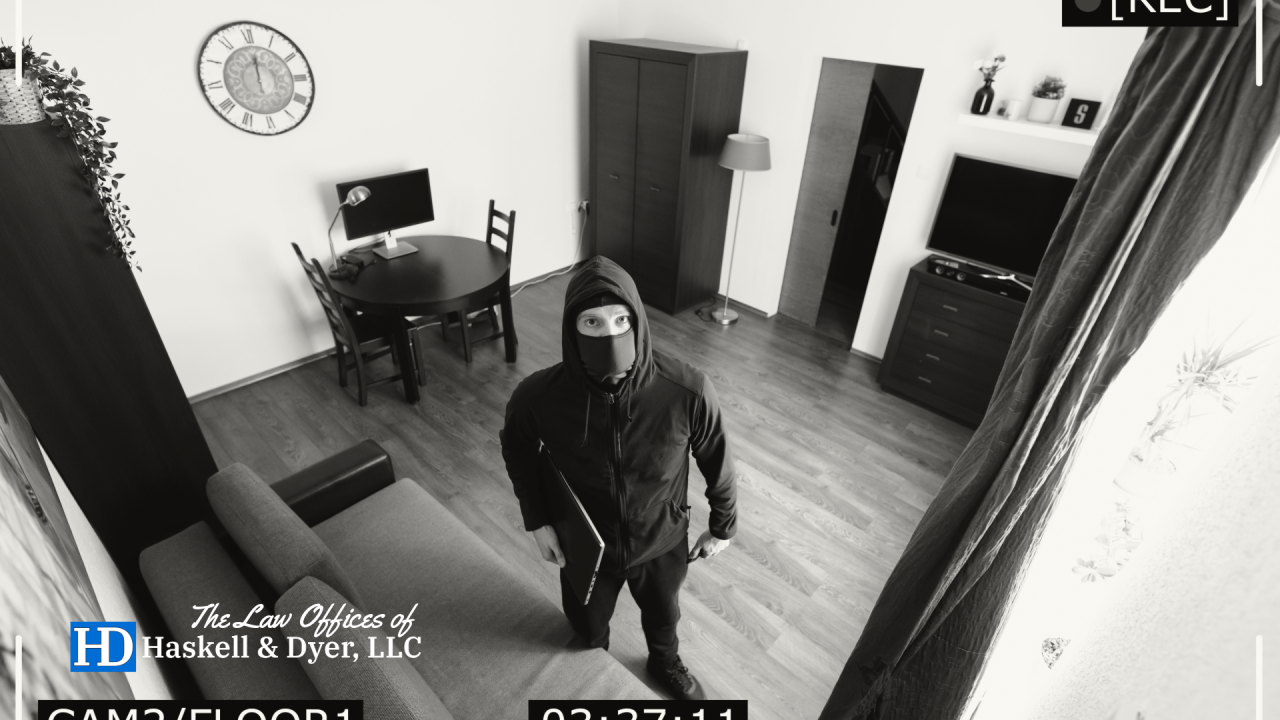
Surveillance video is increasingly central. Most commercial establishments along Route 235 and Route 5 maintain surveillance cameras at registers, entrances, and parking lots. The video sometimes provides better identification evidence than the victim’s account, sometimes worse. Counsel reviews every available frame, looking for moments where the perpetrator’s face, build, gait, or distinguishing features either match or do not match the defendant.
Suppression Motions
The investigation that follows an armed robbery often produces evidence that becomes the heart of the State’s case: a stop of the defendant’s vehicle, a search that recovered alleged stolen property or a weapon, a custodial interrogation that produced statements, an identification procedure that named the defendant. Each of these is a potential target for suppression.
Fourth Amendment suppression of physical evidence requires showing that the search was unlawful. The lawfulness of the stop, the scope of any search incident to arrest, the basis for any inventory search, and the validity of any consent are all reviewed. Successful suppression of recovered weapons, alleged stolen property, or clothing matching the description can dramatically alter the case.
Fifth Amendment suppression of statements requires showing that Miranda warnings were not given, were inadequate, or that any waiver was not voluntary. Custodial interrogation without proper warnings produces statements that cannot be used in the State’s case-in-chief. Coercive conditions during questioning can produce involuntariness findings that exclude even Mirandized statements.
Identification suppression requires showing that the procedure was suggestive and that the suggestiveness produced an unreliable identification. The Maryland framework for identification suppression closely tracks the federal due process framework and offers real opportunities when the procedure was flawed.
Defense Strategy
Effective defense in armed robbery cases follows several patterns. First, attack the weakest count. The State’s evidence on identification, on the weapon element, and on the underlying force may differ in strength. A defense theory that targets the weakest count can drop the case from a stacked felony to a lesser disposition.
Second, file aggressive suppression motions. Investigations into armed robbery cases often reveal Fourth and Fifth Amendment vulnerabilities, and successful motions can collapse the State’s case before trial.
Third, develop alibi or alternative perpetrator theories when the facts support them. Cases where the defendant has documented alibi witnesses, GPS or device location data showing presence elsewhere, or evidence of an alternative perpetrator can produce reasonable doubt at trial.
Fourth, structure plea negotiations to avoid the § 4-204 count. The mandatory minimum on § 4-204 cannot be suspended below the floor. A plea structure that resolves the underlying robbery while dropping § 4-204 can save years of incarceration. Our § 4-204 defense article walks through that statute in depth.
Armed Robbery Defense in St. Mary’s County
When a stacked felony with mandatory minimum exposure is on the charging document, the defense must address every count. Haskell & Dyer represents accused individuals on armed robbery cases in the Circuit Court for St. Mary’s County.
Main Office: 301-627-5844
24/7 Hotline: 240-687-0179
Related Reading
- Behind the Counter and Beyond the Bag: The Complete St. Mary’s County Theft and Robbery Defense Guide
- Section 4-204 Firearm Enhancement Defense
- St. Mary’s County Weapon Crimes Defense Guide
Frequently Asked Questions
What is armed robbery under Maryland law?
Armed robbery is the taking of property from another person using force or threat of force while armed with a dangerous or deadly weapon.
What are the penalties for armed robbery in Maryland?
Armed robbery is a felony punishable by up to 20 years in prison, and additional firearm charges can add mandatory consecutive sentences.
What is the firearm enhancement under Maryland law?
Use of a firearm in a crime of violence carries a mandatory minimum sentence of 5 years that must be served consecutively and cannot be suspended.
What counts as a dangerous weapon in an armed robbery case?
Dangerous weapons include firearms, knives, or any object used in a way that creates fear of serious harm. Even a note claiming possession of a weapon may qualify.
Can someone be charged with armed robbery without a real weapon?
Yes. If the victim reasonably believed a weapon was present, such as through a written note or simulated weapon, the charge may still apply.
How important is eyewitness identification in armed robbery cases?
Eyewitness identification is often central, but it can be challenged based on stress, lighting, and suggestive police procedures.
What role does surveillance video play in these cases?
Surveillance footage from stores or nearby areas can be used to identify suspects, but it may also be used by the defense to challenge identification.
Can evidence be suppressed in an armed robbery case?
Yes. Evidence obtained through unlawful stops, searches, or interrogations may be excluded if it violates constitutional protections.
What defenses are commonly used in armed robbery cases?
Common defenses include mistaken identity, lack of a weapon, unlawful police conduct, and alibi evidence showing the defendant was elsewhere.
Can Haskell and Dyer defend armed robbery charges in St. Mary’s County?
Yes. Haskell and Dyer represents individuals facing armed robbery charges, focusing on challenging evidence, reducing exposure, and protecting the client’s future.
References
Maryland Code Annotated, Criminal Law Article § 3-402 (2024). Robbery. Annapolis, MD: General Assembly of Maryland.
Maryland Code Annotated, Criminal Law Article § 3-403 (2024). Robbery with dangerous weapon. Annapolis, MD: General Assembly of Maryland.
Maryland Code Annotated, Criminal Law Article § 4-203 (2024). Wearing, carrying, or transporting handgun. Annapolis, MD: General Assembly of Maryland.
Maryland Code Annotated, Criminal Law Article § 4-204 (2024). Use of firearm in commission of crime of violence. Annapolis, MD: General Assembly of Maryland.
Maryland Code Annotated, Public Safety Article § 5-133 (2024). Restrictions on possession of regulated firearms. Annapolis, MD: General Assembly of Maryland.
Legal Disclaimer: This article provides general information about Maryland armed robbery law and is not legal advice. Reading it does not create an attorney client relationship with Haskell & Dyer. For a confidential consultation, call 301-627-5844 or our 24/7 hotline at 240-687-0179.