
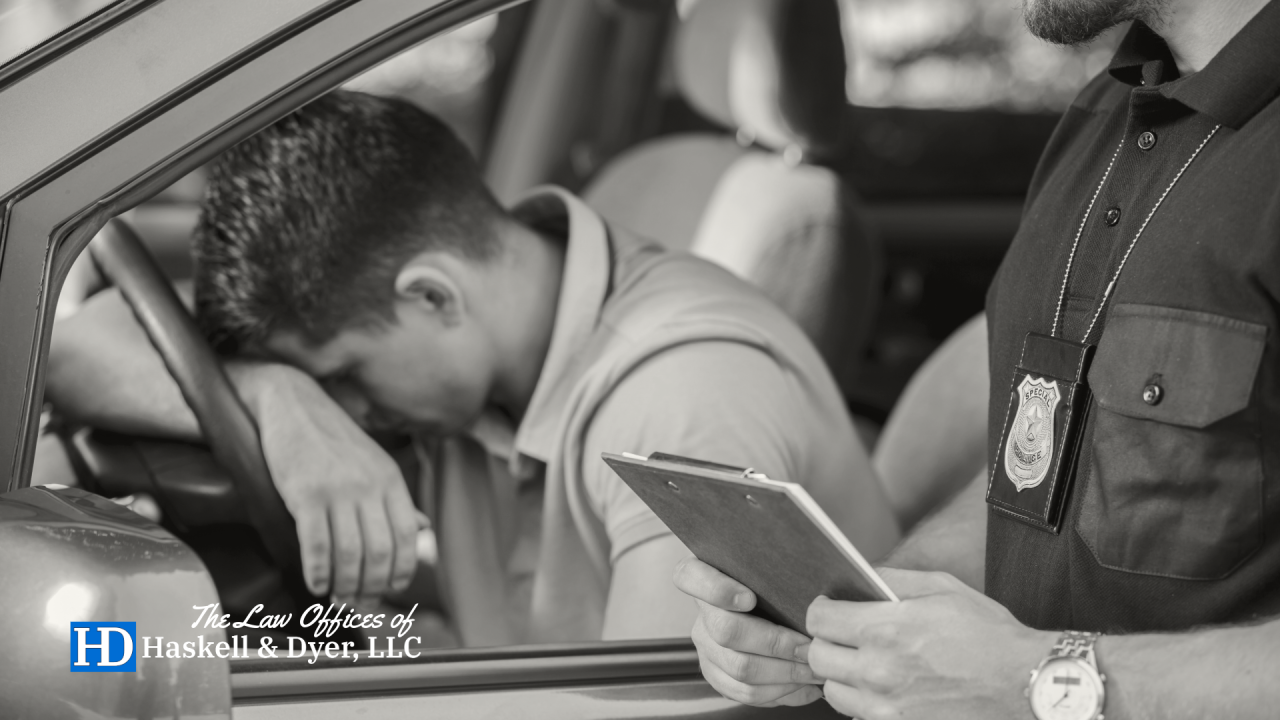
Calvert County runs DUI checkpoints regularly, especially on summer weekends and around holidays. The stops are short but carry real consequences. This guide walks through what actually happens when you roll up to one, what your rights are, where drivers make avoidable mistakes, and what to do if a checkpoint turns into an arrest.
If you drive in Calvert County on a Friday or Saturday night during the summer, there is a good chance you have already passed through a DUI checkpoint. Most drivers pass through in under sixty seconds and never think about it again. For the small number who get pulled to the side, the evening changes in a hurry.
As a Southern Maryland defense attorney who has represented many drivers stopped at checkpoints in Prince Frederick, Solomons, Chesapeake Beach, and Huntingtown, I want to walk you through what really happens, what your rights are, and the small mistakes that most often turn a quick stop into a DUI arrest.
Why Calvert County Uses DUI Checkpoints
Checkpoints are a deterrent strategy more than an investigative one. The goal is visibility. When drivers know checkpoints run in specific corridors, a subset of them think twice before driving after drinking. Maryland courts have upheld properly run checkpoints under both the U.S. and Maryland Constitutions, but the operation has to follow a set of procedural rules.
The Calvert County Sheriff’s Office, often with support from Maryland State Police at the Prince Frederick barrack, plans checkpoint locations based on crash data, prior DUI arrests, and traffic flow. That is why you see them on Route 4 near Huntingtown, along Route 2/4 in Lusby, at the foot of the Thomas Johnson Bridge near Solomons, and along MD 261 between Chesapeake Beach and North Beach.
Where Checkpoints Typically Set Up
There is no secret list, but patterns show up year after year:
- Route 4 between Dunkirk and Prince Frederick on weekend evenings
- Route 2/4 south of Prince Frederick toward Lusby and Solomons
- MD 231 heading east out of Prince Frederick
- MD 261 through the twin beaches of North Beach and Chesapeake Beach
- Near Solomons Island after major festivals or holiday fireworks
- Near Port Republic on winery circuit weekends
Rule of thumb: If there is a waterfront event, a long weekend, or a holiday with fireworks, assume there will be a checkpoint somewhere along your drive home.
What a Checkpoint Stop Actually Looks Like
A properly run checkpoint follows a predictable choreography. Officers stop vehicles based on a neutral pattern, such as every third or fifth car, rather than handpicking drivers. When you reach the stop:
- An officer approaches your window and asks for license and registration.
- The officer makes a quick observation: do you smell like alcohol, are your eyes red, is your speech clear, are you fumbling for your wallet?
- If everything looks fine, you get waved through. Total time is often under a minute.
- If the officer sees anything that raises a question, they ask you to pull to a secondary area for further conversation. This is where a traffic stop can turn into a DUI investigation.
Your Rights at the Checkpoint
You have more rights than most drivers realize. You also have a few obligations you cannot talk your way out of. The short version:
- You must provide your driver’s license, registration, and proof of insurance. Refusing this is its own offense.
- You do not have to answer questions about where you have been, how much you have had to drink, or whether you had anything at all. You can politely say you would rather not answer.
- You do not have to consent to a search of your vehicle. If the officer has probable cause, they can search without your consent. If they do not, do not give it.
- You do not have to perform field sobriety tests. These are voluntary, although refusing can still factor into what happens next.
- The breath test is not voluntary in the same way. Refusing it triggers administrative penalties under Maryland’s implied consent law, though the criminal DUI case may still be harder for the state to prove.
Common Mistakes Drivers Make at Checkpoints
The checkpoint itself is not a trap. The trap, if there is one, is what drivers say and do once they are asked to pull over. I have seen the same mistakes repeat across hundreds of cases:
Volunteering Information
An officer asks, “Where are you coming from?” The driver says, “Just had a couple at the Tiki Bar.” That single sentence, said to be polite, becomes the entire foundation of the case against them. You are not required to answer, and you should not.
Trying to Explain Away the Smell
“I only had one drink” is not the answer people think it is. Officers are trained to document it, and it lands in the report as an admission. If you say nothing, there is nothing to document.
Fumbling or Overexplaining
Nervousness looks a lot like impairment. Take a breath, move deliberately, hand over the paperwork the officer asked for, and let silence do the work.
Performing Field Sobriety Tests on the Shoulder of Route 4
The Horizontal Gaze Nystagmus test, the Walk and Turn, and the One Leg Stand are all designed to be done on flat, dry ground in good lighting. The shoulder of a highway at night, in a breeze, next to flashing lights, is close to the worst possible environment for these tests. Sober people routinely fail them under those conditions.
Be careful: You have the right to decline field sobriety tests. Declining is not the same as admitting guilt, and a skilled defense attorney can explain that decision in court.
What Happens If You Are Arrested at a Checkpoint
If the officer decides there is probable cause for a DUI, you will be placed under arrest, transported to the Calvert County detention facility or to the nearest barrack, and asked to take a breath test on the Intox EC/IR II instrument. You will be read the DR-15 advice of rights before the test.
From that moment, two clocks start running. The criminal case will be scheduled in the Prince Frederick District Court. The administrative case with the Maryland MVA requires you to request a hearing within ten days, or your license suspension kicks in automatically.
For the complete roadmap of how both tracks move forward, read our full guide: Calvert County DUI and Traffic Defense Lawyer: The Complete Driver’s Guide.
Getting Help After a Checkpoint Arrest
The sooner you bring in a lawyer, the more options you have. Dash cam and body worn camera footage can be preserved. Checkpoint operational logs can be requested. The neutral stopping pattern can be challenged if it was not actually neutral. Every one of these things fades with time, so early action is not optional.
At The Law Offices of Haskell and Dyer, we have represented drivers stopped at checkpoints across Calvert County for years. We know the officers, the courthouse, and how local prosecutors evaluate checkpoint cases. That familiarity translates into better outcomes, whether that means a dismissal, a reduction to a lesser charge, or a plea that protects your license and your livelihood.
Stopped at a Calvert County Checkpoint?
Call before your MVA clock runs out. The first consultation is free.
This article is for general information only and does not constitute legal advice. Contacting our firm does not create an attorney client relationship until a formal agreement is signed.